I took my first show to the Edinburgh Fringe this year. As my comedy partner and I wrote the show, booked the accommodation and train tickets, and decided who would have the pleasure of carrying around the projector, we chatted relentlessly about what a great time we were going to have and how excited we were to perform. But when we arrived at the venue, it dawned on us: that’s a lot of chairs. Who the hell is going to come? Every day, we hit Cowgate and the Royal Mile with our flyers, only to ask our medium-sized audience afterwards whether anyone had come because we’d flyered them. Barely anyone had. Most had found us through the online Fringe Programme or seen us perform on one of the festival’s many mixed-bill showcases.
There is growing anxiety among Fringe performers about the future of festivals and traditional routes into comedy. Rising costs, low attendance and the closure of staple Fringe media outlets like Fest are all weighing on aspiring performers. It can be frustrating to constantly hear that things are not as they once were, and easy to feel that there is no realistic way in anymore. It left me wondering whether new, experimental comedians could still create a real buzz around a show. Surely, where there’s a will, there’s a way.
This year, a duo of newer comedians, Gabriel Madden and Daniel Trengove, also known as Dos Leches, seemed to have done just that with their show Rhino Conservation Erotic Novel. When I spoke to them, they admitted they had “expected it to be harder”. In fact, Trengove said, “it couldn’t have been any easier”. At the word “easy”, my ears pricked up. I had to know more.
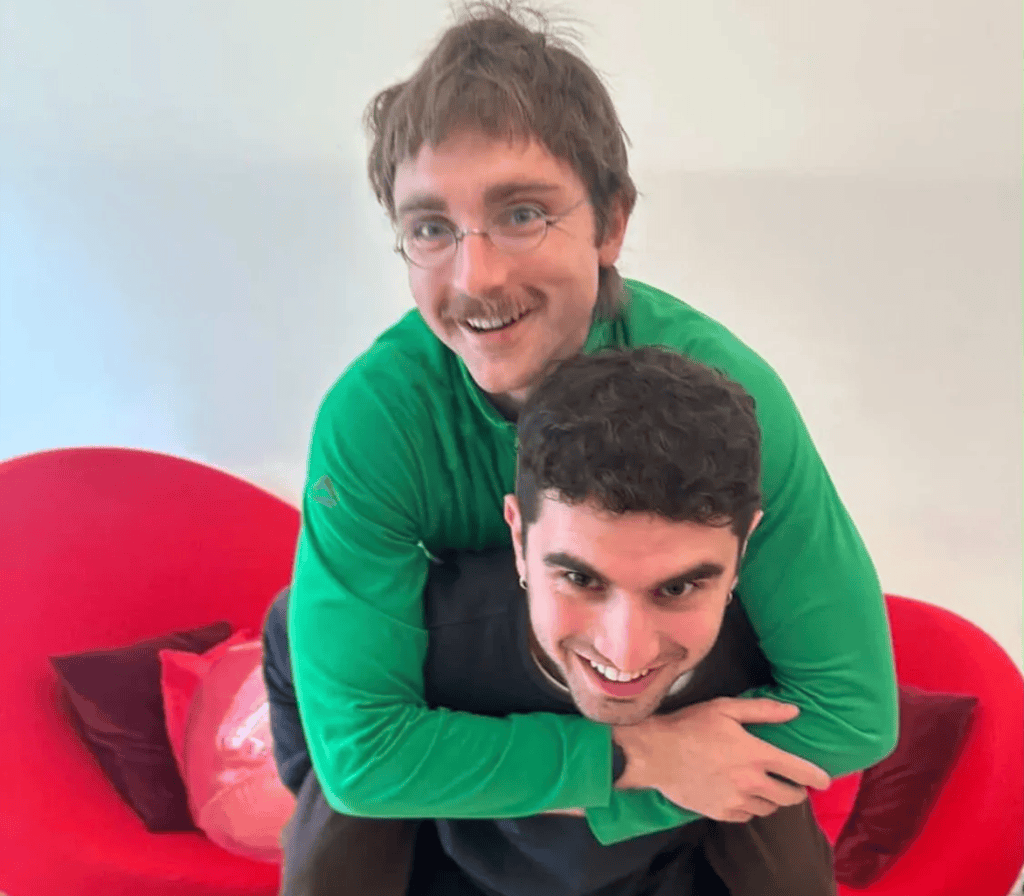
“We did almost no flyering,” Madden tells me, and they didn’t spend any money on advertising. Instead, the pair filmed a short sketch for Instagram Reels and TikTok in which they offered pensioners kisses (tongue optional), while holding a giant sign. The video amassed an astonishing 5.7 million views on Instagram. At a festival where thousands of performers compete for attention, those numbers translated into real audiences. Furthermore, their advertising wasn’t just free; it had the potential to make them money. Dos Leches sold out ten of their shows, with strong attendance on other days. They estimate that their audience came “90% from Instagram, 5% from TikTok and 5% word of mouth”.
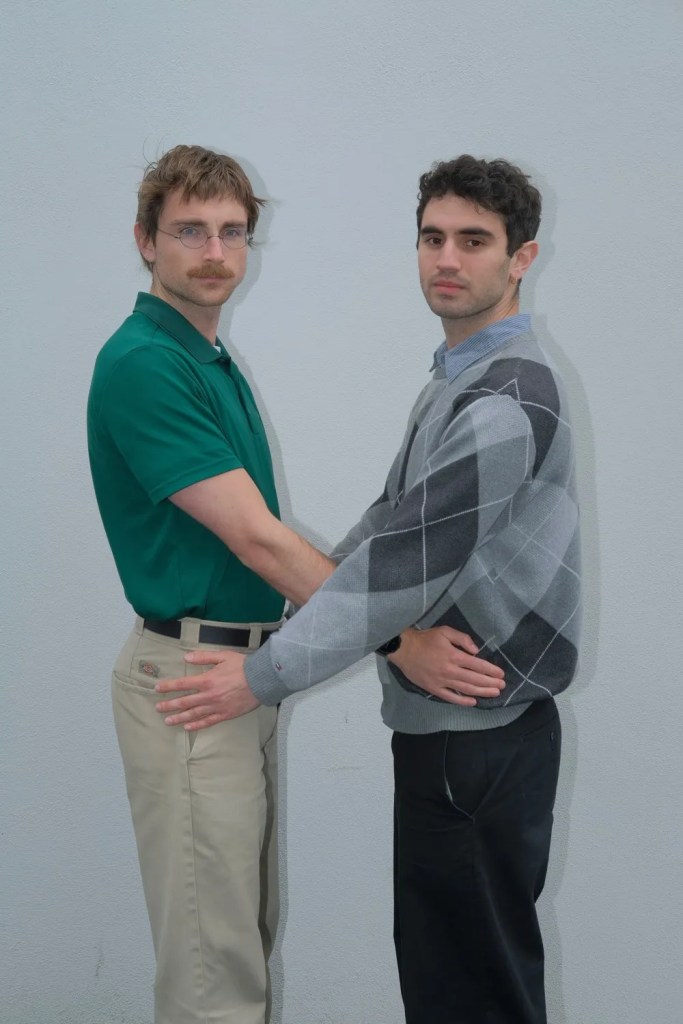
Edinburgh was not the first festival to host Rhino Conservation Erotic Novel. Trengove recalls performing it at Leicester Comedy Festival to seven people. “It was terrible,” they laugh. In the run-up to Edinburgh, getting people to attend their work-in-progress shows had been a constant source of stress. They were repeatedly asking the same family and friends to come along. At one point, Madden tells me, “I was going to house parties and trying to sell people tickets to the show.”
Madden says that, although the pair had already found some success on the traditional stand-up circuit, it had not necessarily translated into opportunities. “Without social media it would have taken us like three more years to get where we are now.”
Theirs is very much a social media success story. But it also raises a bigger question about the future of live comedy. As Trengove puts it: “If you don’t have social media or money, I don’t know how you’d do it.”
And it’s not just younger comedians who are reaping the benefits of social media. Andy Field has had a Radio 1 comedy show, performed on television and succeeded in major competitions such as the BBC New Comedy Awards. Yet he has also recently made the decision to start producing content. His Instagram following now stands at around 104,000, largely built through his series Drawing a Horse Every Day Until I’m Really Good at Drawing Horses.
We discussed his 2026 Edinburgh show, Andy Field: Giddy Up. Like Madden and Trengove, Field tells me, “I didn’t flyer at all.” He had some flyers printed, but only “just to not upset the venue”. It is almost as though printing them has become an outdated school rule: something you are expected to do, whether or not it makes a difference.
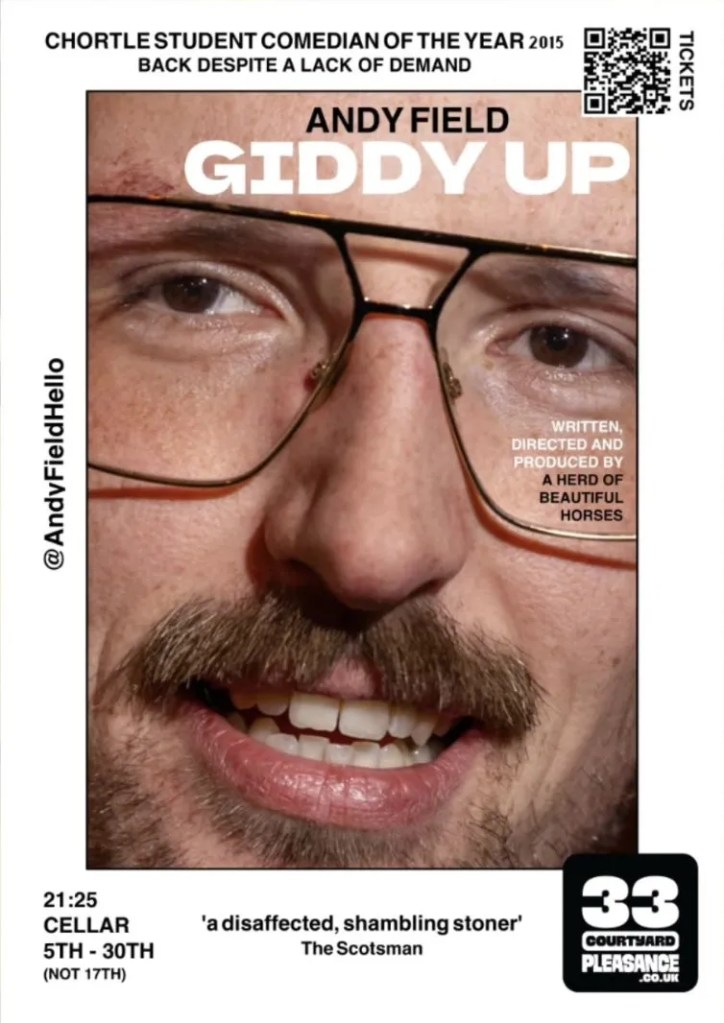
“Flyering feels a bit like community service,” he says. “Seeing young comedians flyering on the side of the Mile – it feels like a rite of passage for them… people like to feel busy.” Expending energy shouting about your show can feel productive, even if it doesn’t necessarily sell tickets.
Flyering is undoubtedly part of the trademark Edinburgh Fringe atmosphere. Yet if it produces few tangible results, perhaps its purpose has become as much about performing the role of a Fringe comedian as selling tickets. Awkward comedians roam the streets alongside overconfident a cappella performers, and the strange encounters and embarrassing pitches have become part of the festival itself. Field made a successful and hilarious video, An A-Z of Flyering Pitches, a sort of Fringe inside joke parodying these often absurd pitches. The act of flyering, with all its social discomfort, has become comedy in its own right: content to be shared online.
Madden and Trengove’s experience also suggests that picking up audience members on the street is not necessarily the best way to find a crowd receptive to your comedy. On the one occasion they successfully attracted an audience through flyering, they found it produced their worst show. These audience members hadn’t discovered them through their videos or developed an interest in their comedy beforehand. Madden describes them as “nutcases”, “the sort of people that go up to Scotland without any plans”.
For Field, the benefits of social media extend beyond ticket sales. He has noticed that audiences respond differently to his live comedy since building a following online.
“Doing social media makes the live shows better,” he tells me. “People laugh harder because they know you and it’s you saying the funny thing.”
It is like hearing something from a friend rather than a stranger whose sense of humour you have yet to understand. Field describes this as a symptom of building a “parasocial relationship” with your followers. Trengove makes a similar observation: “You don’t have to do those icebreakers, you go in with straight water.”
Social media can also cut out the middleman between performers and the public. Field argues that it allows comedians to establish a public identity and give people an understanding of their work “without having to appear on Mock the Week twelve times.” Performers no longer necessarily need the approval of major broadcasters or traditional media institutions to find an audience.
Alastair Clark offers a different perspective. His show, Alastair Clark: On the Record, managed to achieve an excellent run without enormous numbers on Instagram or TikTok. It played at the very same venue as ours, just an hour earlier. As we arrived each day, huge queues of people spilled out of the venue, audience members full of praise and buying tote bags. Clark tells me that “this year’s Fringe was great on every metric”. He had surpassed his previous achievements in audience numbers, reviews and industry connections.
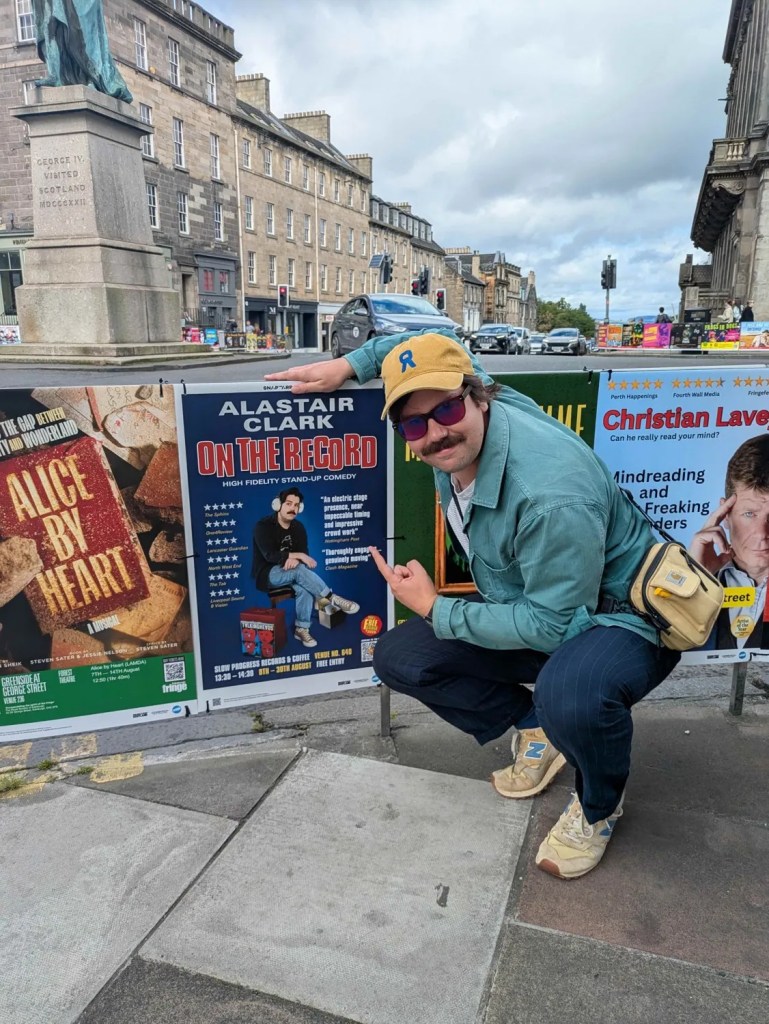
When I ask him how he did it, the answer seems to lie in a combination of quality and hard work. Clark has been performing his own shows at the Fringe since 2011. He performed On the Record at the Fringe in 2025 before touring it around UK record shops this year, a run covered by Chortle. By the time he returned to Edinburgh, the show had already built an audience and gained momentum.
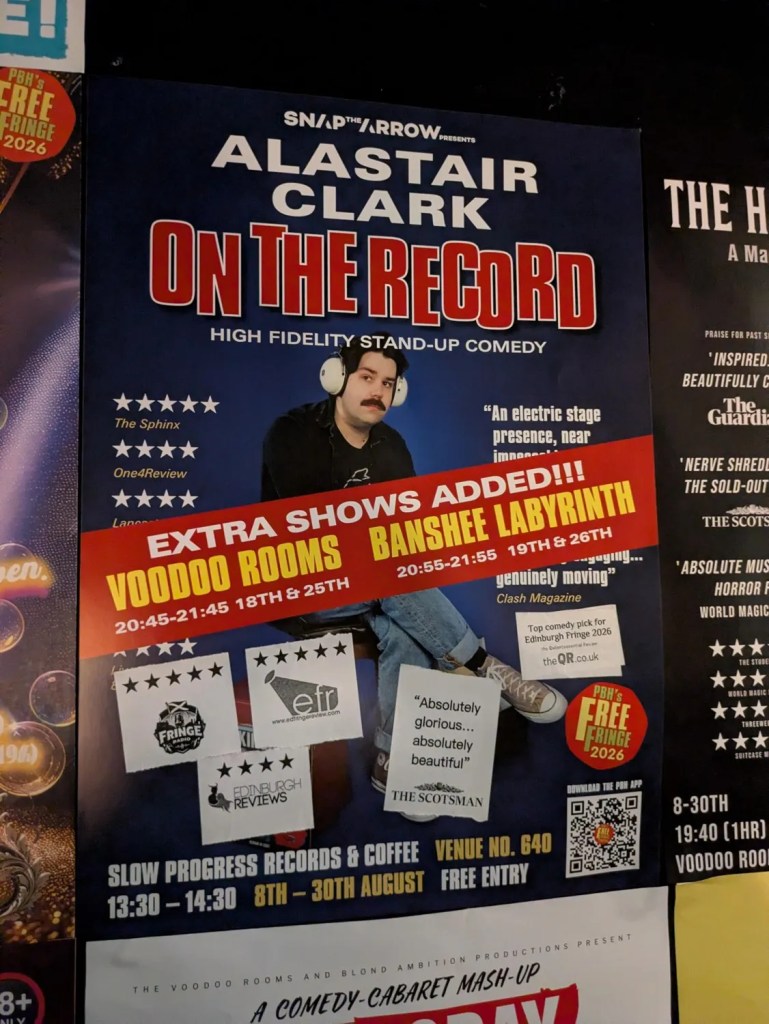
Clark has also found a particular niche to tap into: record enthusiasts and music fans. Rather than relying entirely on people stumbling across his work, he has cultivated an audience that can follow him from one performance to the next through a mailing list. Traditional reviews have also played a part. “I got a really good review from the Scotsman early doors,” he says.
But even Clark has noticed that traditional methods of promotion are becoming less effective.
“I think the difficulty is flyering is getting less potent,” he tells me. Accommodation in Edinburgh has become so expensive that audiences do not stay as long. The turnover of visitors is faster, leaving people with less time to wander between shows. The spontaneity that once defined the Fringe is becoming harder to maintain. His insights make me wonder whether someone starting out today could still build a following on the ground.
He remembers a time when it was possible to do the Fringe without even being listed in the official programme. Flyering and the PBH Free Fringe’s catalogue, The Wee Blue Book, could be enough to bring people through the door.
Perhaps a social media following is the missing piece. If you can build one. But that possibility comes with its own uncertainty. Not everyone will go viral, and an online following is no guarantee of a successful live show. Madden argues that comedians should learn to perform live before focusing on social media. Some online performers, he says, struggle to translate their success to the stage, whereas he rarely sees the reverse happen.
There is also the question of what motivates performers in the first place. Madden and Trengove tell me that they love making videos, and that their success is a welcome side effect. Clark is a live performer who wants to make his own shows and tour them. For Field, the original attraction of stand-up was that “ideas are your currency”, wherever they are showcased.
Maybe the answer isn’t to choose between the street and the screen, but to find a way for the two to work together. I think it’s safe to say I’ll be trying to get on social media before Fringe 2027.
Published with ArtCultureUK


Leave a Reply