• Rating: 3.5 out of 5.

    The shelves of improv troupe Beansville’s Video Store are lined with an infinite collection of possible movies encased within a selection of VHS tapes, each representing a different film genre. Even by improv standards, Video Store starts with wide-open possibilities: we don’t know if we’re about to witness a Western, a rom-com, a period drama, or a gritty film noir.

    On review night, the genre roulette landed on horror, and we had the twisted pleasure of watching Tim, Mills, Katie, Ed, and Colin bring to life their improvised movie: The Ceiling of Slime. The title of the movie is the sole prompt given by the audience, and just like that, the “tape” is popped in, “rewound,” and the madness begins.

    The structure of Video Store is one of its biggest strengths. The show starts with a middle scene, then jumps to the finale, before finally rewinding to show us the beginning. Both scenes are funny in isolation, but when they return to them with added context, the punchlines land even harder. It is a clever narrative device that not only creates comical reveals but also gives the performers a subtle goal to work toward, guiding the story without restricting it.

    Recurring bits – like uncomfortable family dinners or bureaucratic nonsense at the estate agency – help anchor the improv and keep the plot moving. Scenes rarely drag, as the performers are quick to respond to the action on stage with fresh ideas.

    The troupe also uses the chosen genre to guide the narrative, giving every detail introduced a distinctly spooky tone. The story begins with a suspiciously cheap house listed at just £2,000, a price so low, something sinister must surely be afoot. They lean into classic genre tropes, drawing a sharp contrast between the mundane human world and the spooky, fantastical realm that lies closer than first thought.

    Everyday dynamics like work and family life—depicted through characters like estate agent Mallory (Katie), her colleague Steve (Tim), and her brother and mother (Ed and Mills)—are juxtaposed with the bizarre presence of the slime monster duo (Colin and Tim). This clash between the ordinary and the grotesque fuels much of the show’s comedy, especially in the surreal romance between Colin’s slime monster, also called Mallory, and the human Mallory’s mother.

    Ed delivers a standout performance as human Mallory’s overconfident investment banker brother, whose smug bravado becomes one of the show’s comedic highlights. His cheeky nonchalance and eagerness to support the ridiculous whims of others become a consistent source of entertainment. Much of the horror spectacle’s creepiness comes from Colin’s wonderfully awkward portrayal of Mallory the slime monster, whose bizarre social etiquette adds an eerie, and often hilarious, edge to every interaction.

    Perhaps the most impressive aspect of Video Store is how neatly the group ties everything together. Characters are drawn quickly, and all manage to develop convincing relationships with one another. There’s an internal logic to the chaos, even when the narrative involves a book made of human skin, haunted property deeds, and romance across species lines.


    Published with The Reviews Hub

  • Rating: 4 out of 5.

    At its core, Jonah Non Grata is a retelling of the Book of Jonah—but this is no ordinary biblical adaptation. Simon Kane expands the story’s universe with songs, jokes, tricks, hymns, and a magical choose-your-own-adventure book to explore themes of power, choice, existentialism, responsibility, and love.

    The show unfolds in three stages: Fight, Flight, and Mariott. The first is chaotic and playful, as Kane transforms the stage into a surreal church service where the audience is invited to participate in a variety of symbolic activities and games. The second, where Jonah is swallowed by the whale, becomes mesmerising—both visually and emotionally—as Kane’s physicality and the stage lighting transport us into the slow, swaying stillness of the whale’s belly. The third is absurd and profound, as Jonah finds himself in a hotel room delivering God’s message to Nineveh by calling everyone in the phone book. It’s like a church service in a parallel universe—but it’s also like a video game, a movie, and a piece of performance art, all delivered by a divinely commanded clown.

    Online movie streaming services

    Kane’s performance is extraordinary. He fills and commands the entire room, transforming his voice and body with astonishing range—from bold, booming singing to the squeak of a prophet trapped in a whale, to clumsily discussing and debating the course of the adventure with the audience. During the second stage, he stands so upright and still, it feels as if he truly is submerged, swaying in an underwater world. With such masterful control of his physicality, he appears to shape-shift before our eyes.

    He also has an uncanny ability to shatter theatrical illusion and rebuild it at will. One moment, he completely dismantles the stage by talking to the lighting technician, calling for the house lights, and inviting a volunteer to read from the choose-your-own-adventure book. The next moment, we are enveloped in a high-production spectacle, with cinematic lighting and sound, as though we have been swept into a movie. The experience is unpredictable, but Kane never loses his grip on the audience, whether he is absorbing our attention or commanding it.

    The show’s comedy thrives on the contrast between the divine and the human—the grandeur of God and the clumsy awkwardness of the prophet. The soaring, dramatic soundtrack meets Kane’s offbeat delivery and hesitant phrasing. His clapping is comically awkward, his magic trick delightfully underwhelming, and he often checks in with the room—“Can we all hear?” He welcomes both laughter and awe.

    Kane has described the show as a modern-day mystery play, and it fits into this tradition through its ability to provoke spiritual contemplation. It is so thematically dense that you could discuss it for days on end, but it is also an absolutely joyous, in-the-moment experience.


    Written and Directed by: Simon Kane

    Published with The Reviews Hub

  • Rating: 3 out of 5.

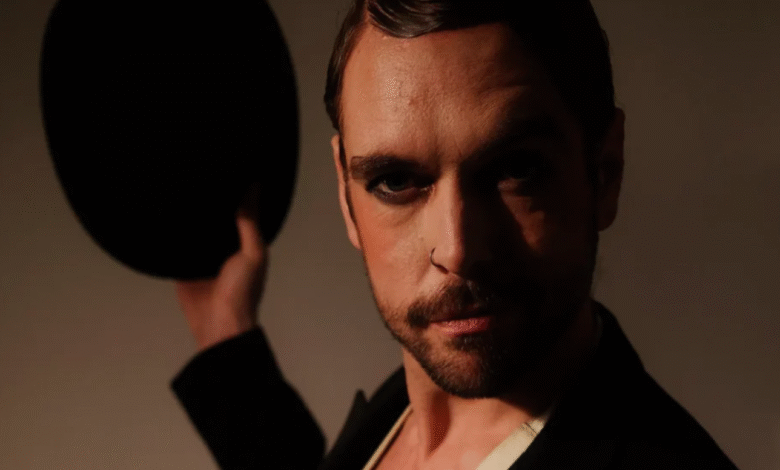
    Victor Von Plume, known off stage as Sam Clarke, is a natural showman — very charismatic, with eyes and eyebrows that speak as much as his voice does. Delightfully Dark feels like classic, old-school cabaret: one small stage, one piano, and minimal tech. The simplicity of the set works in its favour, and Clarke knows how to make the most of it. 

    Cloaked as a glittering grim reaper, complete with a sparkly scythe, he fills the stage. At one point, he instructs the audience to close their eyes to emulate a blackout for a costume change,  which turns out to be nothing more than the strategic ripping of a bit of Velcro. The theatrical grandiosity of his persona set against the pared-back venue becomes a sly metaphor for making the most of what you have — being your biggest, most dazzling self in a limited and short-lived world.

    The songs are a clear strength. Clarke has a rich voice and a talent for crafting sharp, memorable tunes. The standout number, ‘So Many Ways to Die,’ showcases both his vocal range and mordant wit, while the final song reveals a more sincere, emotional side, both toward himself and toward death, in a tribute to a friend who died young. It ends on a bitter-silly note, with Clarke eating a packet of Mini Cheddars — a metaphor for our imperfect lives: we can either stress over their inevitable end or simply enjoy them for what they are. 

    Between musical numbers, he delivers an array of witty lines on subjects such as what to wear to one’s own burial or cremation and the possibility of reincarnation. He also gives an unsuspecting audience member an entertaining tarot reading laced with cheeky innuendo. 

    Crowd interaction is where Clarke truly shines. When he asks if anyone has had a near-death experience, the responses are unexpectedly vivid, and he dives into each with relish. Later, when two audience members both choose “cat” as their preferred reincarnation, he rolls his eyes and points out the absurdity of wasting the power of reincarnation on turning everyone into cats. He’s adept at spotting and amplifying the ridiculous in whatever the audience offers.

    That said, the cabaret format, especially in the context of a stage show, proves to be somewhat of a double-edged sword. In a fuller, more energetic room, its loose structure might soar, but on review night, it sometimes dragged. At points, Clarke seemed to lose his way, with transitions between segments meandering and lacking drive. These clumsier stretches undercut an otherwise strong persona and performance style, and in weaker moments, he appeared to lose confidence and hold back from fully committing to his best material. Furthermore, the shift to a slightly heavier tone at the end could have hit harder and felt a little less disorientating if the rest of the show had a tighter flow. With a bit more planning and a sharper script, the pacing could improve without sacrificing the show’s spontaneous energy.

    Delightfully Dark is at its best when Clarke leans into his charisma, sharp songwriting, and playful rapport with the audience. Even when the pacing falters, his wit, presence, and theatrical flair keep the show engaging. With more structure, Victor Von Plume could have a show that fully showcases his irrefutable charm. 


    Written by: Victor Von Plume (Sam Clarke)

    Published with Everything Theatre

  • Rating: 3 out of 5.

    Ethan Simm’s VOICE is a play that could only have come from the mind of someone young and ambitious, with deep affection for the stage but equal uncertainty about how to authentically exist on it. Staged with bold simplicity, it speaks to anyone who has ever offered their voice up to an audience.

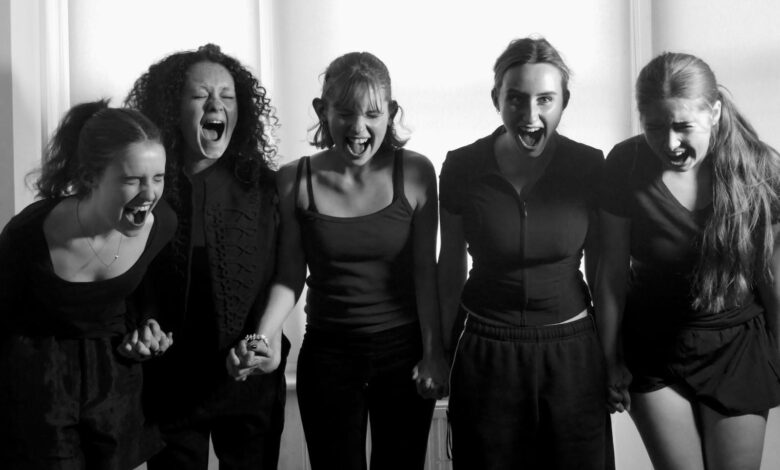
    Set in a drama school, the play follows a group of students; Jax (Milly Thorpe), Charlie (Lucy Gant), Arlo (Nina Amos), Aoife (Lauren Maguire), and Ariya (Niamh Spillane), as they deliver emotionally raw monologues drawn from their real lives in a class run by their teacher Joan (Annie Porter). The goal: to help them find their voice, primarily by tapping into their own vulnerability. The densely emotional monologues are punctuated by lighter ensemble scenes that capture the chaos of a drama class, and casual conversations between the students, which help to anchor the intense dramatic pieces to the real world.

    VOICE is meta by nature. It’s a play about acting, but more than that, it’s about the awkward, often absurd tension between the stage and the real world. Fourth wall breaks, mid-monologue tangents, and quiet conversations between scenes, blur the line between performer and person and illuminate just how many voices swirl around any piece of theatre.

    The monologues often drift into ellipses rather than land on conclusions, and resist polished story telling. Jax ends her otherwise well-choreographed and punchy piece with a shrug, mumbling that she’s not quite sure how to finish. Ariya, who initially refuses to participate in the exercise, inadvertently delivers a monologue of sorts in the form of a spontaneous rant. Aoife recounts her experience as a Northern Irish woman in England with grace and pain, only to be met with upbeat praise from her peers. Her reaction, “I don’t think yous quite understand the significance of what I just said” gets a laugh from the audience, but it also leaves a lingering sting. Simm highlights the risk involved in turning your real feelings into a product that might not be received in a way you are happy with.

    The staging is minimal: handheld flashlights, with occasional blackouts and spotlights. This stripped-back aesthetic complements the rawness of the piece. The focus falls entirely on the performers and their words, theatre in its most elementary form: voice and body in space.

    The production isn’t without its rough edges. The initial chaos of the drama class is entertaining and captures the high-octane energy of a drama school environment, but the rapid transitions between ensemble exercises, fleeting asides revealing the students’ anxieties, and the start of the monologues can feel a little disorienting. A clearer sense of structure early on would help build anticipation around the daunting challenge of performing these deeply personal pieces. Additionally, while the dramatic monologues are powerful, the characters’ off-stage personalities occasionally feel underdeveloped. With a little more time invested in defining who these students are beyond the drama school classroom, the emotional weight of their monologues could land even more powerfully.

    When glimpses of the students’ off-stage personalities break through, we really understand and warm to them. In one moment, during a birthday song, Jax adds a deliberately rehearsed vocal flourish. It’s an amusing yet telling display of her instinct to embellish any moment that might showcase her talent. Amos is particularly memorable as Arlo, bringing sharp comic timing and a disarming, almost naïve lightness that cuts through the play’s emotional intensity.

    VOICE doesn’t pretend to have all the answers to the many questions it poses, and astutely so. By refusing to tie everything up neatly, Simm creates something authentic to the rich, but still unformed voices the play represents.


    Written by: Ethan Simm
    Directed by: Ethan Simm
    Co Produced by: Lauren Maguire and Elijah Lifton
    Stage Manager: Abby Walsh
    Dramaturg: Sophie Clancy

    Published with Everything Theatre